Logic: The Art of Reasoning
Logic, the second art of the Trivium, is the science of correct reasoning. It teaches the mind to distinguish between truth and falsehood, to construct valid arguments, and to follow the laws of thought. In classical and Masonic tradition, logic is the bridge between the mastery of language and the pursuit of wisdom, enabling the student to reason soundly about any subject and to defend truth against sophistry and error.
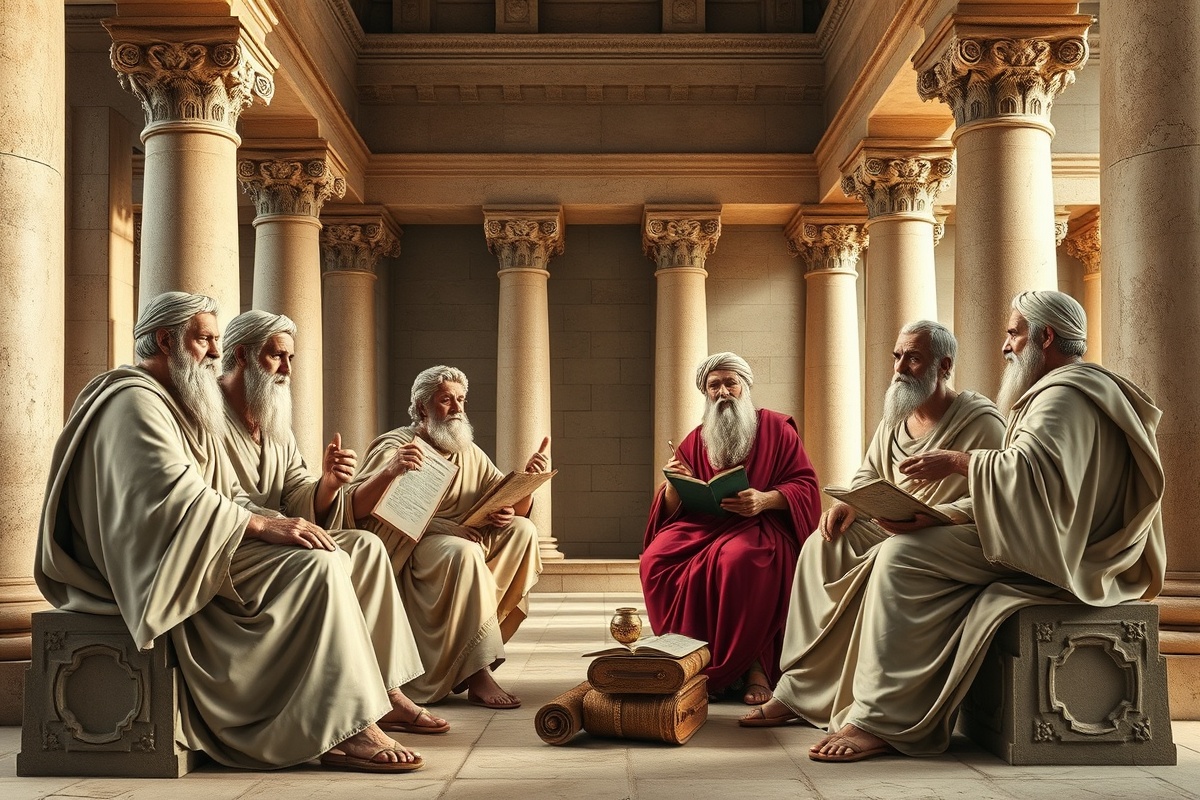
The Nature and Purpose of Logic
Logic comes from the Greek "logos," which means both "word" and "reason." Logic is the science that teaches the rules by which the mind operates validly. It is concerned with the structure of arguments, the relationship between premises and conclusions, and the standards by which reasoning can be judged as correct or incorrect.
Unlike grammar, which deals with the forms of language, logic deals with the content of thought. Logic answers the question: given certain premises, what conclusions necessarily follow? It provides the tools for distinguishing between sound and unsound reasoning, between valid and invalid arguments. The student of logic learns to construct arguments that are logically rigorous and to identify fallacies in the arguments of others.
Logic is the essential tool for the pursuit of truth. Without logic, one cannot reliably distinguish truth from falsehood, fact from fiction, genuine knowledge from mere opinion. In this sense, logic is not merely an academic discipline, but a fundamental requirement for intelligent action in the world.
Aristotelian Logic: The Tradition
Aristotle (384-322 BCE) created the first comprehensive system of logic, which dominated Western thought for over two thousand years. The centerpiece of Aristotelian logic is the syllogism—a three-part argument consisting of two premises and a conclusion. The classic example is: "All men are mortal; Socrates is a man; therefore, Socrates is mortal."
The power of the syllogism lies in the fact that if the premises are true and the form is valid, the conclusion must necessarily be true. This guarantee of truth transfer from premises to conclusion makes the syllogism an invaluable tool for reasoning. Aristotle's system of logic detailed all the valid forms of the syllogism and identified common fallacies—errors in reasoning that appear valid but are not.
Aristotle also taught that sound logic depends on clear definitions of terms. For any argument about a subject, one must first know what that subject is. The process of definition—determining what a thing essentially is—is itself a logical discipline. Through definition, the student learns to think precisely about the objects of knowledge.
The Laws of Thought
The Law of Non-Contradiction
A thing cannot both be and not be in the same respect at the same time. This fundamental law of thought rules out contradiction. One cannot consistently assert that something is both true and false, or that an entity both exists and does not exist. The law of non-contradiction provides the foundation for all rational discourse.
The Law of the Excluded Middle
Everything must either be or not be. There is no middle ground between being and non-being. Applied to propositions, this means every statement is either true or false; there is no third option. This law ensures that thought divides reality into clear categories.
The Law of Identity
A thing is itself. Whatever is, is. If we are to think about anything at all, we must be able to identify it and refer to it consistently. The law of identity ensures that the subject of our thought remains the same throughout our thinking.
Logic in Medieval and Renaissance Thought
Medieval scholars encountered Aristotle's logical works through Islamic translations and commentaries. The recovery of Aristotle's logic during the 12th and 13th centuries was instrumental in the development of Scholastic theology. Medieval theologians recognized that logic was essential for reasoning about theological truths and resolving apparent contradictions in scripture and doctrine.
The great medieval universities developed sophisticated disputational methods based on Aristotelian logic. Students learned to construct arguments, to respond to objections, and to reason systematically about complex questions. The medieval trivium education cultivated minds trained in rigorous logical thinking.
Renaissance thinkers continued the logical tradition while also developing new approaches. The discovery of ancient logical texts and new translation methods enriched the study of logic. By the time Freemasonry emerged in the 18th century, the logical tradition was well established in Western intellectual culture, and Masonic philosophy would draw heavily on this tradition of rational inquiry.
Logic in Masonic Philosophy
In Freemasonry, logic is understood as the instrument of reason—the faculty that distinguishes the Mason from those who blindly follow authority or tradition without understanding. The Mason is taught to think for himself, to examine evidence, and to draw conclusions based on rational principles. Logic provides the method for this intellectual independence.
The Masonic commitment to truth is inseparable from the study of logic. The Mason who studies logic learns to defend truth against sophistry, to recognize fallacious arguments, and to construct sound reasoning. In the context of Masonic fellowship, logical thinking prevents misunderstanding and enables genuine dialogue.
Furthermore, logic is understood in Masonic tradition as reflecting the rational order of the universe. The laws of thought—non-contradiction, excluded middle, identity—are not arbitrary human conventions but necessary truths that reflect the structure of reality itself. To master logic is to attune oneself to the rational principles governing existence.
Logic in Contemporary Understanding
In the modern world, where misinformation, propaganda, and sophistry abound, the study of logic becomes ever more important. The Mason who masters logic becomes resistant to manipulation and deception. He can distinguish between genuine argument and fallacious reasoning, between evidence and mere assertion.
Modern symbolic logic and formal logic systems have extended and refined the Aristotelian tradition, but the fundamental principles remain unchanged. The laws of thought continue to govern all rational discourse. For the contemporary Mason, the study of logic—whether classical Aristotelian logic or modern formal systems—remains an essential discipline for intellectual development.
The study of logic cultivates intellectual virtue: the habit of thinking carefully, of examining assumptions, of following arguments to their conclusions, and of accepting truth wherever it leads. These qualities are central to the Masonic ideal of the enlightened Mason, committed to the pursuit of truth through reason.