Grand Lodge of Arizona
The Grand Lodge of Arizona emerged during the territorial period and has been a cornerstone of Masonry in the Southwest.
Founded: 1873
Location: Phoenix, Arizona
Key Contribution: Southwest Masonic Leadership
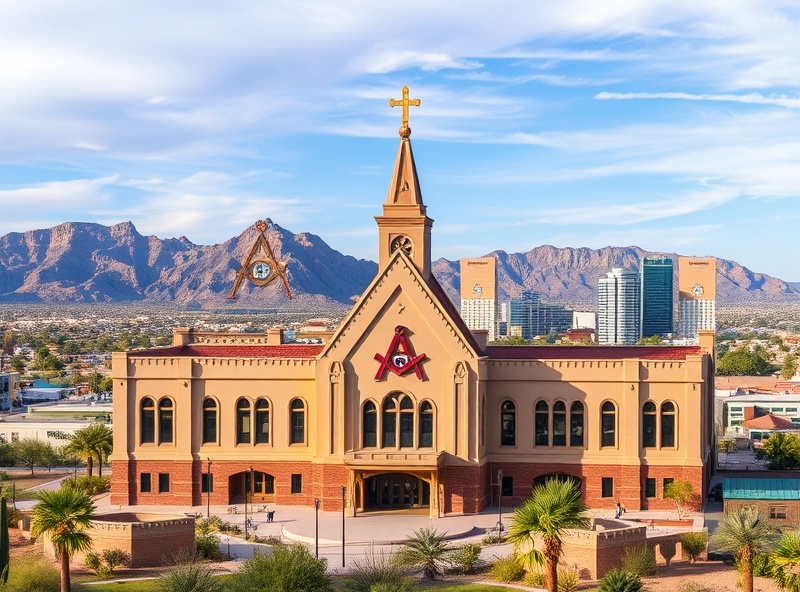
Deep History: A Journey Through Time
Explore the comprehensive history of the Grand Lodge of Arizona across four pivotal eras
Founding and Early Vision
The Grand Lodge of Arizona was officially established in 1873, during the territorial period when Arizona was developing as a political and economic entity. Early Arizona Masonry attracted miners, merchants, ranchers, and civic leaders who saw Freemasonry as a means to bring order, education, and moral development to the rapidly expanding territory. Masonic lodges in Phoenix, Tucson, and other settlements became important cultural institutions, serving as gathering places where men of influence could share ideas, conduct business ethically, and contribute to community building in the Arizona Territory.
Growth and Expansion
Throughout the late 19th and early 20th centuries, Arizona Masonry experienced substantial growth as the territory developed toward statehood in 1912. New lodges were chartered across Arizona's diverse regions, and appendant bodies including the Scottish Rite and York Rite established themselves throughout the state. Arizona Masons became pioneers in establishing educational institutions, supporting healthcare initiatives, and participating in civic improvements. The fraternity became deeply woven into the fabric of Arizona society, with Masonic principles influencing business practices, legal development, and community organization.
Mid-Century Development
The 20th century brought significant economic growth to Arizona through agriculture, mining, and eventually technology and tourism industries. Arizona Masonry adapted to these transformations while maintaining its fundamental commitments to education and community service. Masonic lodges remained active in supporting schools, hospitals, and charitable organizations throughout the state. Arizona Masons participated in civic leadership, supporting water development projects, economic diversification, and social progress that transformed Arizona from a frontier territory into a modern state.
Modern Era and Legacy
Today, the Grand Lodge of Arizona represents over 150 years of continuous Masonic service to the Southwest region. With active lodges throughout Arizona, the Grand Lodge continues its mission of developing men of character through education, brotherhood, and service. Modern Arizona Masons support Shriners Hospital for Children, fund educational scholarships, provide disaster relief, and engage in community development. The Grand Lodge remains influential in Arizona society, serving as a beacon of Masonic tradition and moral leadership while adapting to contemporary challenges.
Historical Overview
Key milestones in the history of the Grand Lodge of Arizona
founding
The Grand Lodge of Arizona was established in 1873, during Arizona's territorial period.
territorial
Arizona Masonry played important roles in establishing civic institutions and community structures.
statehood
Masonic lodges were instrumental in the development of Arizona communities leading up to statehood.
modern
The Grand Lodge of Arizona remains influential in the region and continues Masonic traditions of service.
Masonic Rituals and Degrees
Understand the sacred rituals, degrees, and ceremonial traditions of the Grand Lodge of Arizona
three Degrees
Arizona follows traditional Masonic degrees and practices.
apprentice
First degree introduction to Masonic principles.
fellowcraft
Second degree intellectual development.
master Mason
Third degree completion of basic education.
appendant
Scottish Rite, York Rite, and appendant bodies.
The Three Basic Degrees
Entered Apprentice
The first degree introduces the candidate to Masonic light, principles, and the foundations of the fraternity's teachings.
Fellowcraft
The second degree develops the candidate's understanding of Masonic science, geometry, and intellectual foundations.
Master Mason
The third degree represents completion of basic Masonic education and preparation for service to the fraternity.
Charitable Work and Community Service
Arizona Masons support hospitals, education, disaster relief, and community service.