The Fellowcraft Degree
Progress and intellectual development: where the Mason actively engages in his own refinement and begins to understand the deeper mysteries of the craft.
Having completed the Entered Apprentice degree, you now advance to the Fellowcraft degree. This degree represents a higher level of knowledge and understanding. As a Fellowcraft, you are no longer merely receiving initial instruction but are actively participating in your own development. This degree emphasizes intellectual growth, the study of the liberal arts and sciences, and a deeper comprehension of sacred geometry and the mathematical principles underlying creation.
Understanding the Fellowcraft Degree
The Fellowcraft degree represents progress, advancement, and the deepening of Masonic understanding.
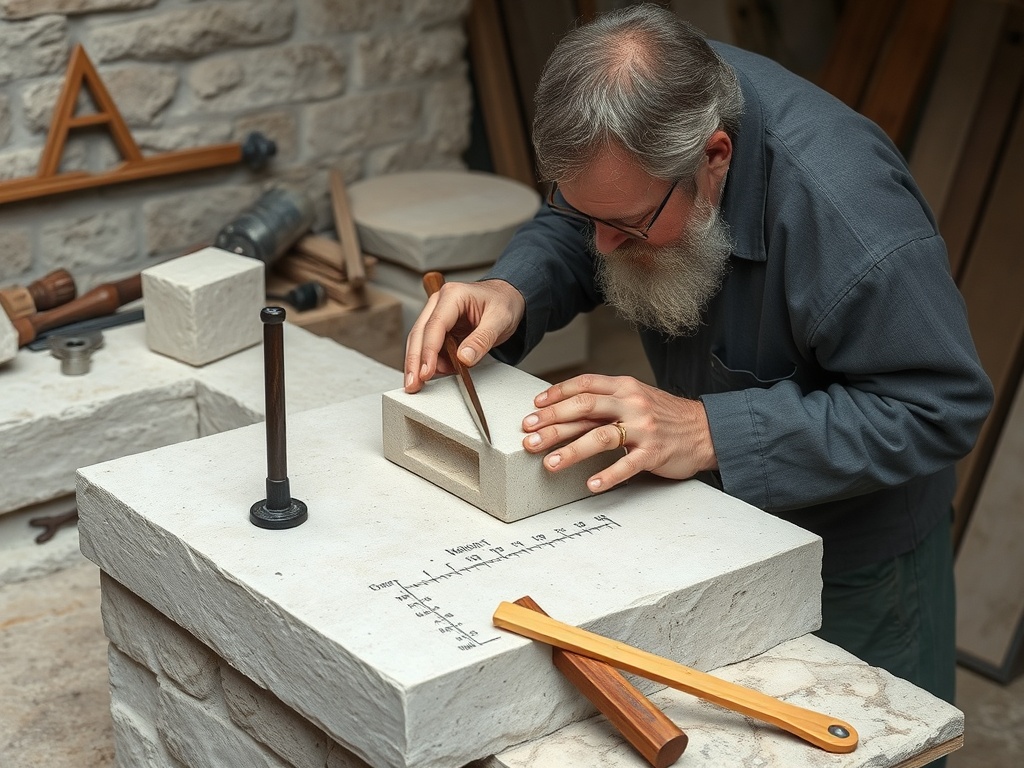
The Mason at Work
"Fellowcraft" means a qualified craftsman—one who has mastered the basics and is now actively engaged in the work of the craft. In the context of Masonry, the Fellowcraft is one who has proven himself capable of basic understanding and is now prepared to engage more deeply with Masonic knowledge. He is no longer a novice but a working member of the fraternity, contributing his talents and labor to the ongoing work.
The term reflects the old craft guild system where a worker began as an apprentice, advanced to a fellowcraft upon demonstrating basic competence, and might eventually become a master craftsman. In Freemasonry, this progression represents spiritual and intellectual development rather than economic advancement.
Progress and Advancement
The Fellowcraft degree emphasizes that Masonic development is a continuous journey. Having taken the first steps as an Entered Apprentice, the candidate now moves forward with increased understanding and responsibility. This degree teaches that progress requires effort and dedication, and that each stage of development builds upon previous achievements.
The Fellowcraft is encouraged to use his newly acquired knowledge to continue refining himself morally and intellectually. This degree marks the transition from being passively instructed to actively participating in one's own development and contributing to the fraternity.
Central Themes of the Fellowcraft Degree
Intellectual Development
Unlike the first degree, which focuses on moral and spiritual principles, the Fellowcraft degree emphasizes intellectual growth. The candidate is introduced to the seven liberal arts: grammar, rhetoric, logic, arithmetic, geometry, music, and astronomy. These represent the breadth of human knowledge and understanding necessary for the complete development of the individual.
Sacred Geometry
The Fellowcraft degree provides deeper exploration of geometry and sacred proportion. The candidate learns about the five orders of architecture and how geometric principles underlie both the construction of buildings and the structure of the universe. This knowledge connects the practical work of the craftsman with profound spiritual truths.
The Winding Stairs
A symbolic feature of the Fellowcraft degree is the winding staircase, representing the candidate's ascent toward higher knowledge and enlightenment. The staircase, with its many steps, reminds the candidate that the path to wisdom is gradual and requires patience, persistence, and steady progress.
The Perfection of Stone
Building on the rough ashlar of the first degree, the Fellowcraft degree discusses the process of shaping and refining stone. This represents the candidate's ongoing process of self-refinement. As stonemasons shape stone into perfect form, so too does the candidate shape his character and understanding through study and practice.
The Five Orders of Architecture
A primary focus of the Fellowcraft degree is the study of architecture and the five orders that represent the principles of proportion, harmony, and beauty.
Tuscan
The simplest and most sturdy of the orders, representing the foundation and basic strength.
Strength & Stability
Doric
Bold and masculine, with vertical grooves called flutes, representing masculine power.
Power & Authority
Ionic
More ornate than the Doric, with graceful scrolls, representing feminine elegance.
Grace & Wisdom
Corinthian
The most ornate and elaborate, with acanthus leaf decorations, representing supreme beauty.
Beauty & Perfection
Composite
Combines elements of Ionic and Corinthian, representing the unity of all principles.
Unity & Harmony
Understanding the Orders
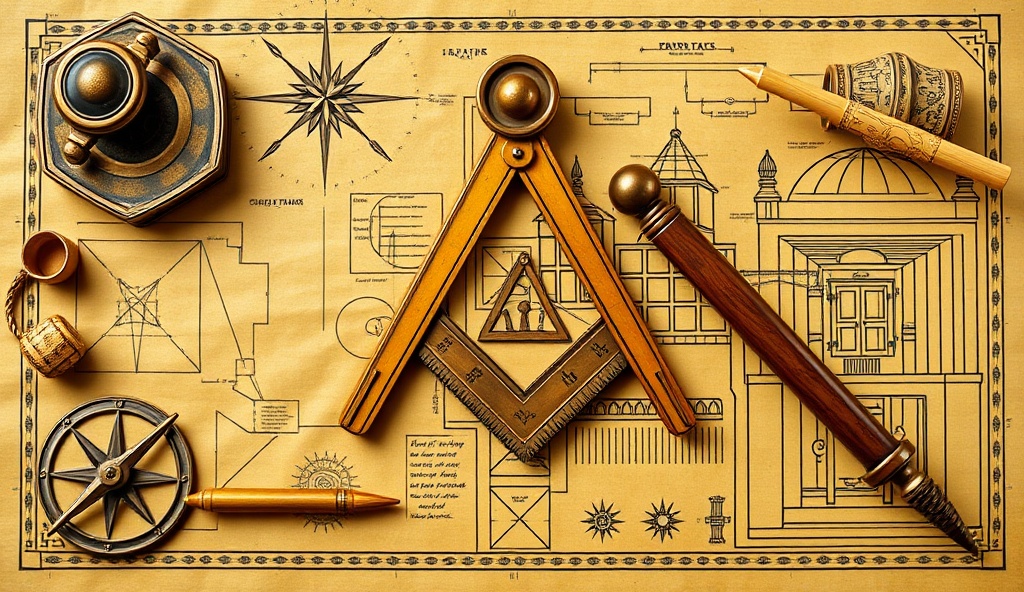
The study of the five orders of architecture teaches the Fellowcraft that beauty and harmony arise from proportion and adherence to principles. Each order has specific proportions between its various parts—the relationship of column height to diameter, the spacing of elements, the use of decoration. These proportions are not arbitrary but are based on mathematical relationships that appear throughout nature.
By understanding these architectural principles, the Fellowcraft learns that the same principles of proportion and harmony that govern beautiful buildings also govern a well-ordered life and a well-proportioned character. The study of architecture becomes, in essence, the study of the principles underlying all creation and perfection.
The Seven Liberal Arts
The Fellowcraft is introduced to the seven liberal arts, representing the breadth of human knowledge necessary for complete development.
Grammar
The foundation of knowledge, teaching the proper use and structure of language to communicate clearly and precisely.
Rhetoric
The art of persuasion and eloquent communication, teaching how to present ideas effectively and move hearts and minds.
Logic
The science of correct reasoning, teaching how to think clearly and arrive at truth through valid argument and analysis.
Arithmetic
The science of number and quantity, forming the basis for all mathematical and scientific knowledge and practical calculations.
Geometry
The science of measurement, proportion, and spatial relationships, essential to architecture and understanding the structure of creation.
Music & Astronomy
Music represents harmony and proportion in sound; astronomy represents the order and harmony of the heavens. Together, they represent the harmony of creation.
The Purpose of the Liberal Arts
The seven liberal arts represent the fields of knowledge that every educated person should possess. In the context of Freemasonry, they serve a deeper purpose: they represent the various dimensions of human understanding necessary for spiritual and moral development. Grammar, rhetoric, and logic develop the intellectual faculties; arithmetic, geometry, music, and astronomy connect the individual to the mathematical and harmonic principles underlying the universe. Together, they represent the complete education of the whole person.
Key Symbols of the Fellowcraft Degree
These symbols carry meanings that deepen the Fellowcraft's understanding.
The Winding Staircase
Represents the gradual ascent toward enlightenment, with steps that can only be climbed one at a time. Symbolizes the patience and persistence required for spiritual and intellectual development.
The Middle Chamber
The chamber in the middle of the lodge where the Fellowcraft receives his wages, representing the reward and satisfaction that comes from honest work and continued development.
The Square
As in the first degree, the square continues to represent morality and the right angles of virtue, but now the Fellowcraft understands it also as a geometric tool for measuring and creating proportion.
Geometric Designs
Various geometric patterns and designs illustrate the mathematical principles underlying creation and demonstrate the relationship between material form and spiritual truth.
The Ritual Experience
The Fellowcraft degree employs ritual, dialogue, and symbolic action to convey its teachings about progress and intellectual development.
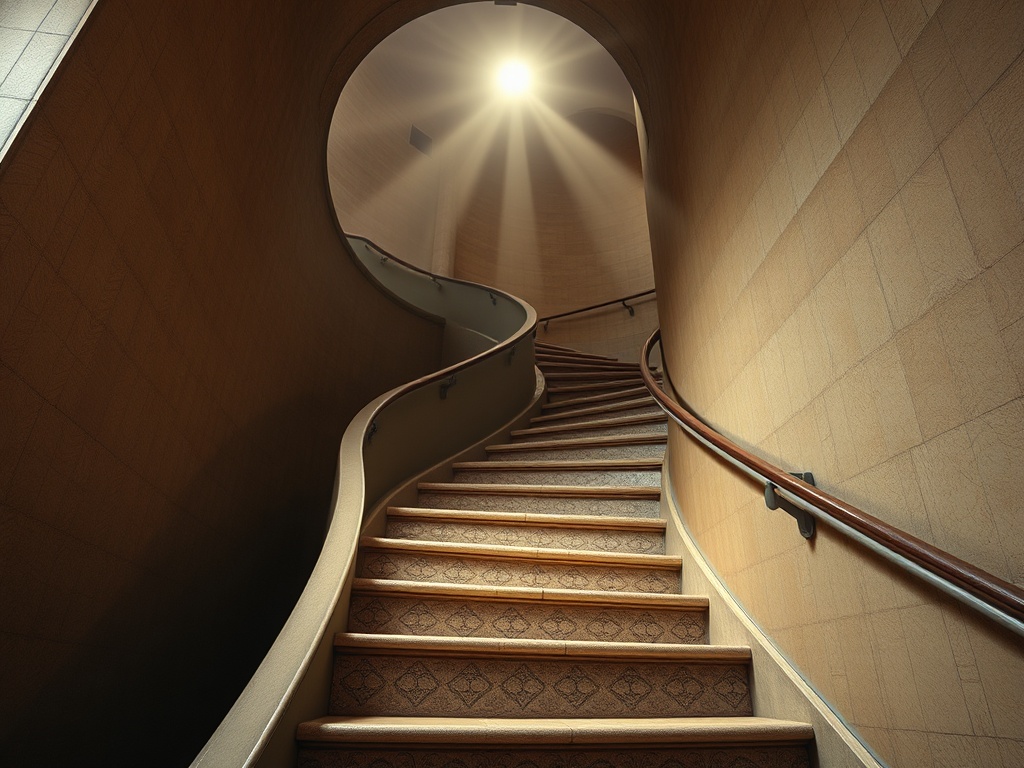
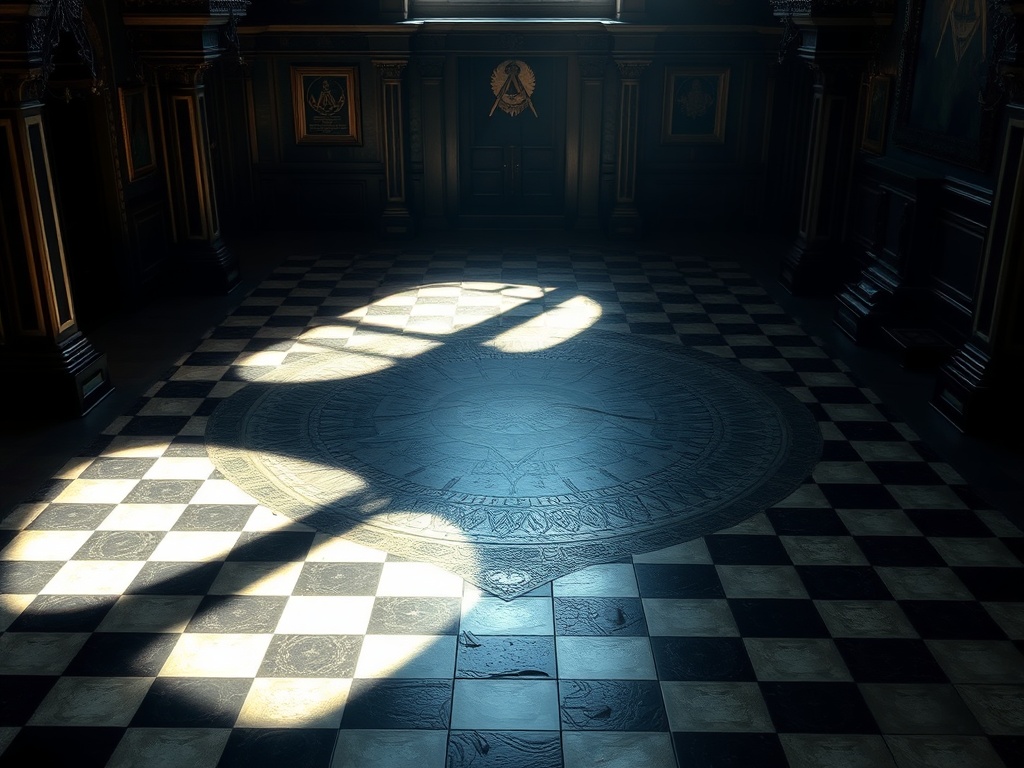
The ritual of the Fellowcraft degree is more complex than that of the Entered Apprentice, reflecting the increased knowledge and understanding required. A central element is the candidate's ascent of the winding staircase, a symbolic journey upward toward greater light and knowledge. As the candidate climbs, he is instructed in the principles of the liberal arts and the orders of architecture.
The degree also includes the teaching of sacred geometry, with detailed discussion of how mathematical proportions appear throughout nature and how these same proportions should inform the Mason's character and conduct. The candidate learns that the universe is governed by mathematical and geometric principles, and that understanding these principles brings the individual into harmony with the divine order.
Throughout the ritual, the emphasis is on active learning and intellectual engagement. Unlike the first degree, which emphasized obedience and acceptance, the Fellowcraft degree encourages questioning, investigation, and the use of reason to understand deeper truths.
Continue Your Journey
Having progressed as a Fellowcraft, you are now prepared to advance to the final degree.